


Computer Science Engineering – AI
“Shaping the Future with Intelligent Systems”
Our AI program focuses on imparting intelligence to machines to solve complex problems, preparing students for the rapidly growing $390.9 billion AI market through cutting-edge curriculum and hands-on experience.
About the Department
AI technology is important because it enables human capabilities like understanding, reasoning, planning, and perception to be undertaken by software effectively, efficiently, and at low cost. Our Artificial Intelligence UG program is primarily focused on applications of imparting intelligence in machines to solve non-deterministic problems which humans can solve with ease.
The main objective of our AI program is to train students to program computers, use datasets or knowledge to solve given problems. We focus on successful applications based on machine learning including systems that analyze past sales data to predict customer behavior, complete tasks using minimum resources, and extract knowledge from bioinformatics information.
Future of AI
The global artificial intelligence market is projected to reach USD 390.9 billion by 2025, growing at a CAGR of 46.2%. The development of voice and image recognition, robotics, drones, and self-driving cars are driving this exponential growth, creating tremendous opportunities for AI professionals.
Key Focus Areas:
- Machine Learning
- Deep Learning
- Natural Language Processing
- Computer Vision
- Data Mining
- Big Data Analytics
- Robotics
- Neural Networks
Teaching Staff
| SNo | Faculty Name | Qualification | Designation | |
|---|---|---|---|---|
| 1 | Dr. HUSSAIN SHARIF | Ph.D | PROF | hussain.cseai@abrcet.edu.in |
| 2 | M. PADMAJA | M.Tech | ASST PROF | mpadmaja.cseai@abrcet.edu.in |
| 3 | Dr. PRASAD | Ph.D | PROF | prasad.cseai@abrcet.edu.in |
| 4 | K.V RATHNAM | M.Tech | ASST PROF | kvrathnam.cseai@abrcet.edu.in |
| 5 | K.PRANEETH | M.Tech | ASST PROF | kpraneeth.cseai@abrcet.edu.in |
| 6 | G.SURYA RAO | M.Tech | ASST PROF | suryarao.cseai@abrcet.edu.in |
| 7 | SHAIK MAHABOOB BASHA | M.Tech | ASST PROF | skmbasha.cseai@abrcet.edu.in |
| 8 | SK.ISMAIL | M.Tech | ASST PROF | skismail.cseai@abrcet.edu.in |
Non-Teaching Staff
| SNo | Staff Name | Qualification | Designation |
|---|---|---|---|
| 1 | S. Siva Krishna | B.Tech | Lab Programmer |
| 2 | S. SADA Krishna | B.Tech | Lab Programmer |
| 3 | M. Lakshmi prasanna | B.Tech | Lab Programmer |
Vision & Mission
Vision
To be a centre for academic excellence in the field of Artificial Intelligence to meet the challenging needs of the industry and society.
Mission
- To enable students to develop logic and problem solving approach in the innovative field of computing and provide solutions for the benefit of society.
- To encourage industry academia relationship for mutual benefit and growth.
- To teach the students with newest technologies to update their knowledge in the field of AI.
Programme Educational Outcomes (PEOs)
| PEO1 | Professional Excellence: Students will establish themselves as effective professionals by solving real problems through the use of computer science knowledge and with attention to team work, effective communication, critical thinking and problem solving skills. |
|---|---|
| PEO2 | Career Preparation: Students will develop professional skills that prepare them for immediate employment and for life-long learning in advanced areas of computer science and related fields. |
| PEO3 | Adaptability: Students will demonstrate their ability to adapt to a rapidly changing environment by having learned and applied new skills and new technologies. |
| PEO4 | Leadership Development: Students will be provided with an educational foundation that prepares them for excellence, leadership roles along diverse career paths with encouragement to professional ethics and active participation needed for a successful career. |
Programme Outcomes (POs)
| PO1 | Engineering Knowledge: Apply the knowledge of mathematics, science, engineering fundamentals, and an engineering specialization to the solution of complex engineering problems. |
|---|---|
| PO2 | Problem Analysis: Identify, formulate, review research literature, and analyze complex engineering problems reaching substantiated conclusions using first principles of mathematics, natural sciences, and engineering sciences. |
| PO3 | Design/Development of Solutions: Design solutions for complex engineering problems and design system components or processes that meet the specified needs with appropriate consideration for the public health and safety, and the cultural, societal, and environmental considerations. |
| PO4 | Conduct Investigations: Use research-based knowledge and research methods including design of experiments, analysis and interpretation of data, and synthesis of the information to provide valid conclusions. |
| PO5 | Modern Tool Usage: Create, select, and apply appropriate techniques, resources, and modern engineering and IT tools including prediction and modeling to complex engineering activities with an understanding of the limitations. |
| PO6 | The Engineer and Society: Apply reasoning informed by the contextual knowledge to assess societal, health, safety, legal and cultural issues and the consequent responsibilities relevant to the professional engineering practice. |
| PO7 | Environment and Sustainability: Understand the impact of the professional engineering solutions in societal and environmental contexts, and demonstrate the knowledge of, and need for sustainable development. |
| PO8 | Ethics: Apply ethical principles and commit to professional ethics and responsibilities and norms of the engineering practice. |
| PO9 | Individual and Team Work: Function effectively as an individual, and as a member or leader in diverse teams, and in multidisciplinary settings. |
| PO10 | Communication: Communicate effectively on complex engineering activities with the engineering community and with society at large, such as, being able to comprehend and write effective reports and design documentation, make effective presentations, and give and receive clear instructions. |
| PO11 | Project Management and Finance: Demonstrate knowledge and understanding of the engineering and management principles and apply these to one’s own work, as a member and leader in a team, to manage projects and in multidisciplinary environments. |
| PO12 | Life-Long Learning: Recognize the need for, and have the preparation and ability to engage in independent and life-long learning in the broadest context of technological change. |
Programme Specific Outcomes (PSOs)
| PSO1 | Build skills to develop software applications in specialized areas of Computer Science and Engineering such as Artificial Intelligence, Machine Learning, Data Science, Web Development, Gaming, Augmented Reality / Virtual Reality (AR/VR). |
|---|---|
| PSO2 | Focus on exploring supervised, unsupervised and reinforcement learning and apply them to a range of AI problems. |
| PSO3 | Make use of AI techniques for industrial applications in the areas of Autonomous Systems, IOT, Cloud Computing, Robotics, Natural Language Processing and emerging areas. |
Laboratories
- 1. Programming for Problem Solving using C Lab
- 2. Computer Engineering Workshop LAB
- 3. Python Programming Lab
- 4. Data Structures Lab
- 5. Object Oriented Programming through C++ Lab
- 6. Operating Systems Lab
- 7. Software Engineering Lab
- 8. Web Application Development Using Full Stack – Frontend Development – Module-I
- 9. Database Management Systems Lab
- 10. R Programming Lab
- 11. Java Programming Lab
- 12. Web Application Development Using Full Stack – Frontend Development – Module-II
- 13. COMPUTER NETWORKS LAB
- 14. DATA WAREHOUSING AND DATA MINING LAB
- 15. Continuous Integration and Continuous Delivery using DevOps LAB
- 16. MACHINE LEARNING LAB
- 17. COMPILER DESIGN LAB
- 18. FUNDAMENTAL OF DATA SCIENCE LAB
- 19. INTRODUCTION TO ARTIFICIAL INTELLIGENCE LAB
- 20. ADVANCE DATA STRUCTURES LAB
- 21. OPERATING SYSTEMS & COMPILER DESIGN LAB
- 22. BIG DATA ANALYSIS LAB
- 23. MEAN STACK LAB
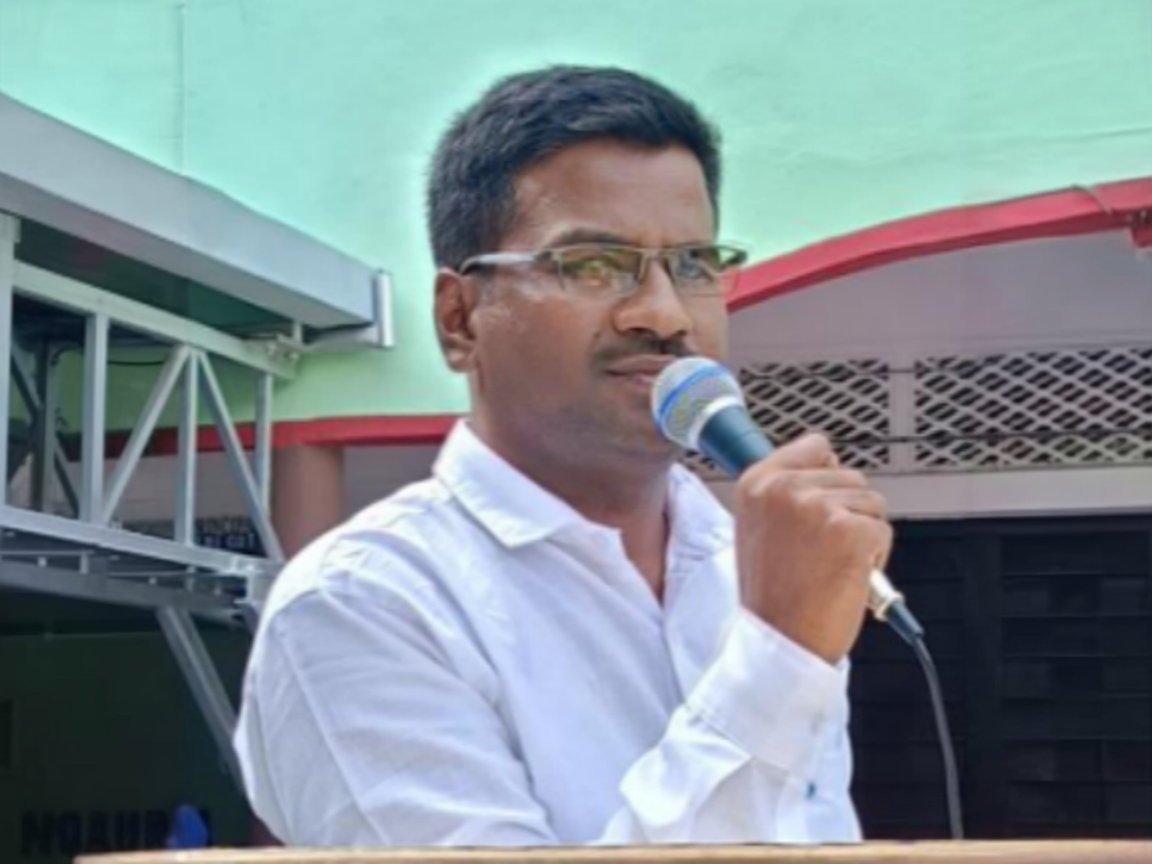
Venkatarathnam korukonda
Head of Department
M.Tech (Ph.D)
Professional Highlights
- Specialization: Artificial Intelligence
- Experience: 10+ Years
- Research Areas: Machine Learning, NLP
- Industry Collabs: 7+ Projects
- ABRCET Tenure: Since 2020
Head of Department Message
Venkatarathnam korukonda
H.O.D, CSE-AI
“Machine intelligence is the last invention that humanity will ever need to make.” — Nick Bostrom
Artificial intelligence (AI) is presently one of the hottest buzzwords in tech and with good reason. The department of CSE-AI is established in 2020 with faculty members highly qualified and certified in emerging technologies.
We are powerfully committed to impart advanced and quality technical education through high standards at undergraduate level. Our faculty is dedicated to prepare students by providing expertise in Artificial Intelligence, Machine Learning, Deep Learning and related fields needed to succeed in our modern society.
The main objective of our department is to offer experiential learning opportunities such as hands-on training, project-based developments, exploration projects, and internships which deliver a solid foundation to work in interdisciplinary groups that invent the future. We cover a wide spectrum of research in areas of Algorithms, Image Processing, Pattern Recognition, Machine Learning, Data Mining, Big-Data Analytics, Natural Language Processing and Computer Security.
