


Computer Science Engineering
“Innovating the Digital Future”
The department offers B.Tech programs in Computer Science Engineering with faculty expertise in AI, Machine Learning, Cryptography, Data Mining, Big Data, and Cloud Computing, preparing students for industry and research careers.
About the Department
The Department of Computer Science Engineering boasts a rich knowledge pool of faculty who are well trained in various fields like Artificial Intelligence, Machine learning, Cryptography, Data mining, BIG DATA, Digital Image Processing, and Cloud computing. We have specialized labs including the open source lab and Machine learning lab specifically for student research and lab curriculum.
To ensure students stay current with technological trends, we conduct regular workshops on emerging technologies like Internet of Things, Cloud computing, and Machine learning. Our primary goal is to prepare students for successful careers in industry or research in universities through a combination of theoretical knowledge and practical experience.
Department Specializations:
- Artificial Intelligence
- Machine Learning
- Cryptography
- Data Mining
- Big Data Analytics
- Cloud Computing
- Computer Vision
- Cyber Security
Key Features:
- State-of-the-art computing facilities and laboratories
- Industry-aligned curriculum with emerging technologies
- Regular workshops and guest lectures from industry experts
- Opportunities for research and innovation
- Strong industry-academia collaboration
- Focus on both technical and soft skill development
Teaching Staff
| SNo | Faculty Name | Qualification | Designation | |
|---|---|---|---|---|
| 1 | Dr. RAVINDRAN | Ph.D | PROF | drravindran.cse@abrcet.edu.in |
| 2 | CH. RAJESWARI | M.Tech | ASST PROF | rajeswari.cse@abrcet.edu.in |
| 3 | CH. SRINIVAS | M.Tech | ASSO. PROF | srinivas.cse@abrcet.edu.in |
| 4 | SK. JILANI | M.Tech | ASST PROF | jilani.cse@abrcet.edu.in |
| 5 | R. PAVANKUMAR | M.Tech | ASST PROF | rpavan.cse@abrcet.edu.in |
| 6 | I.SRAVAN | M.Tech | ASST PROF | sravan.cse@abrcet.edu.in |
| 7 | S.PRAVEEN KUMAR | M.Tech | ASST PROF | praven.cse@abrcet.edu.in |
| 8 | JETTY KUMAR | M.Tech | ASST PROF | jettykumar.cse@abrcet.edu.in |
| 9 | RODDA DILEEP KUMAR | M.Tech | ASST PROF | rkumardileep.cse@abrcet.edu.in |
| 10 | P.V RAJULU | M.Tech | ASST PROF | rajulupv.cse@abrcet.edu.in |
Non-Teaching Staff
| SNo | NAME OF THE FACULTY | QUALIFICATION | DESIGNATION |
|---|---|---|---|
| 1 | SK SABEERA | B.Tech | Lab Programmer |
| 2 | P.VenkataRamana | B.Tech | Lab Programmer |
| 3 | U.Chandarsekar | B.Tech | Lab Programmer |
Vision & Mission
Vision
To be a recognized leader by imparting quality technical education and thereby facilitating the extensive research environment, equipping students with latest skills in the field of technology supplemented with practical orientation to face challenges in the fast morphing modern computing industry and academia for the betterment of the society.
Mission
- To produce best quality computer science and IT professionals and researchers by providing state-of-the-art training, hands on experience and healthy research environment.
- To collaborate with industry and academia around the globe for achieving quality technical education and excellence in research through active participation of all the stakeholders.
- To promote academic growth by establishing Center of Excellences awareness of abroad programs.
- To establish and maintain an effective operational environment and deliver quality, and reliable technology services to the society as well as compliment the local and global economic needs.
Programme Educational Outcomes (PEOs)
| PEO1 | Professional Excellence: Students will establish themselves as effective professionals by solving real problems through the use of computer science knowledge and with attention to team work, effective communication, critical thinking and problem solving skills. |
|---|---|
| PEO2 | Career Preparation: Students will develop professional skills that prepare them for immediate employment and for life-long learning in advanced areas of computer science and related fields. |
| PEO3 | Adaptability: Students will demonstrate their ability to adapt to a rapidly changing environment by having learned and applied new skills and new technologies. |
| PEO4 | Leadership Development: Students will be provided with an educational foundation that prepares them for excellence, leadership roles along diverse career paths with encouragement to professional ethics and active participation needed for a successful career. |
Programme Outcomes (POs)
| PO1 | Engineering Knowledge: Apply the knowledge of mathematics, science, engineering fundamentals, and an engineering specialization to the solution of complex engineering problems. |
|---|---|
| PO2 | Problem Analysis: Identify, formulate, review research literature, and analyze complex engineering problems reaching substantiated conclusions using first principles of mathematics, natural sciences, and engineering sciences. |
| PO3 | Design/Development of Solutions: Design solutions for complex engineering problems and design system components or processes that meet the specified needs with appropriate consideration for the public health and safety, and the cultural, societal, and environmental considerations. |
| PO4 | Conduct Investigations of Complex Problems: Use research-based knowledge and research methods including design of experiments, analysis and interpretation of data, and synthesis of the information to provide valid conclusions. |
| PO5 | Modern Tool Usage: Create, select, and apply appropriate techniques, resources, and modern engineering and IT tools including prediction and modeling to complex engineering activities with an understanding of the limitations. |
| PO6 | The Engineer and Society: Apply reasoning informed by the contextual knowledge to assess societal, health, safety, legal and cultural issues and the consequent responsibilities relevant to the professional engineering practice. |
| PO7 | Environment and Sustainability: Understand the impact of the professional engineering solutions in societal and environmental contexts, and demonstrate the knowledge of, and need for sustainable development. |
| PO8 | Ethics: Apply ethical principles and commit to professional ethics and responsibilities and norms of the engineering practice. |
| PO9 | Individual and Team Work: Function effectively as an individual, and as a member or leader in diverse teams, and in multidisciplinary settings. |
| PO10 | Communication: Communicate effectively on complex engineering activities with the engineering community and with society at large, such as, being able to comprehend and write effective reports and design documentation, make effective presentations, and give and receive clear instructions. |
| PO11 | Project Management and Finance: Demonstrate knowledge and understanding of the engineering and management principles and apply these to one’s own work, as a member and leader in a team, to manage projects and in multidisciplinary environments. |
| PO12 | Life-Long Learning: Recognize the need for, and have the preparation and ability to engage in independent and life-long learning in the broadest context of technological change. |
Programme Specific Outcomes (PSOs)
| PSO1 | Understand, design and analyze computer programs in the areas related to Algorithms, System Software, Web design, Big data, Artificial Intelligence, Machine Learning and Networking. |
|---|---|
| PSO2 | Focus on improving software reliability, network security or information retrieval systems. |
| PSO3 | Make use of modern computer tools for creating innovative career paths, to be an entrepreneur and desire for higher studies. |
Laboratories
- 1. Programming for Problem Solving using C Lab
- 2. Computer Engineering Workshop LAB
- 3. Python Programming Lab
- 4. Data Structures Lab
- 5. Object Oriented Programming through C++ Lab
- 6. Operating Systems Lab
- 7. Software Engineering Lab
- 8. Web Application Development Using Full Stack – Frontend Development – Module-I
- 9. Database Management Systems Lab
- 10. R Programming Lab
- 11. Java Programming Lab
- 12. Web Application Development Using Full Stack – Frontend Development – Module-II
- 13. COMPUTER NETWORKS LAB
- 14. DATA WAREHOUSING AND DATA MINING LAB
- 15. Continuous Integration and Continuous Delivery using DevOps LAB
- 16. MACHINE LEARNING LAB
- 17. COMPILER DESIGN LAB
- 18. FUNDAMENTAL OF DATA SCIENCE LAB
- 19. INTRODUCTION TO ARTIFICIAL INTELLIGENCE LAB
- 20. ADVANCE DATA STRUCTURES LAB
- 21. OPERATING SYSTEMS & COMPILER DESIGN LAB
- 22. BIG DATA ANALYSIS LAB
- 23. MEAN STACK LAB
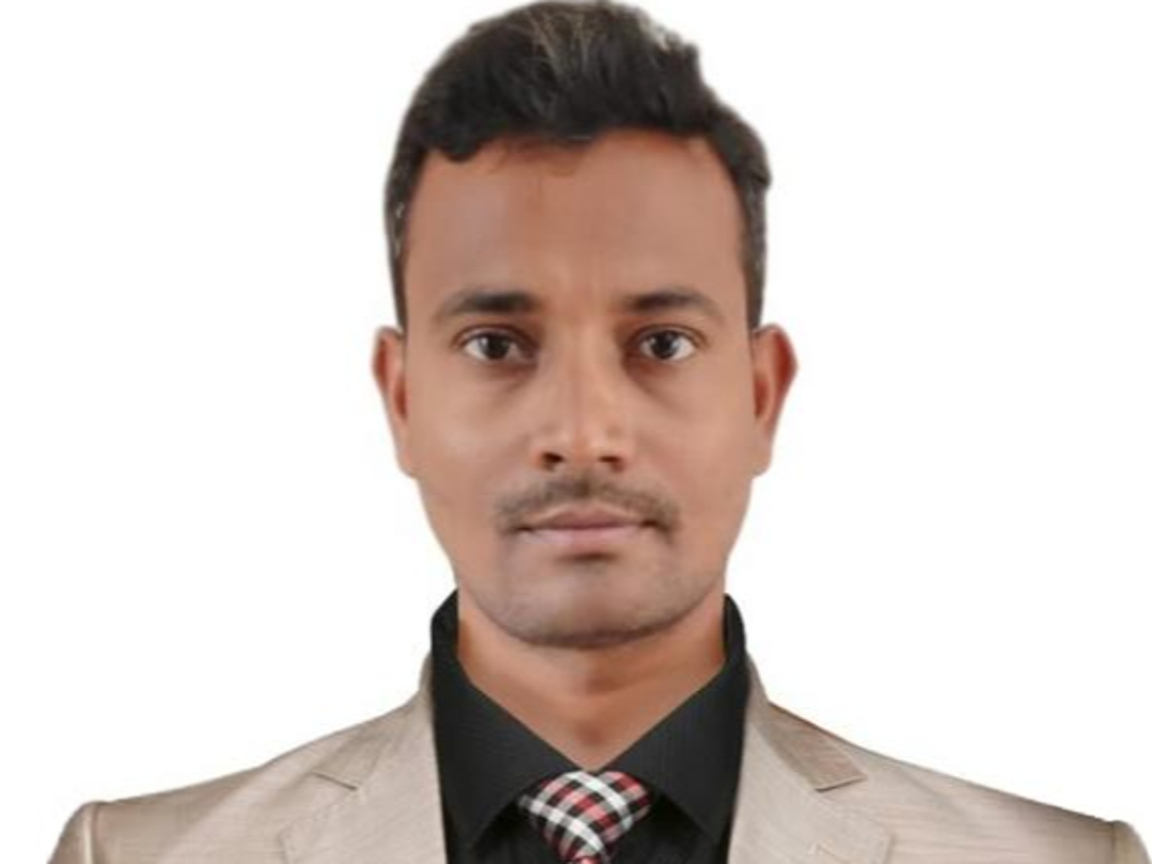
RAYA PAVAN KUMAR
Head of Department
M.Tech (Ph.D)
Professional Highlights
- Specialization: Artificial Intelligence
- Experience: 12+ Years
- Research Areas: Machine Learning, Data Science
- Industry Collabs: 6+ Projects
- ABRCET Tenure: Since 2018
Head of Department Message
RAYA PAVAN KUMAR
H.O.D, CSE
Welcome to the Department of Computer Science and Engineering at ABRCET. Our department is an active, innovative, and dedicated educational platform that focuses on the development of the new generation technocrats.
In today’s ever changing world the role of computer science and engineering is crucial in introducing advancements in various fields. At ABRCET we don’t just teach technical skills but we encourage critical thinking, innovation and ethical skills.
Our curriculum incorporates emerging technologies like Artificial Intelligence, Data Science, Cyber security, Cloud computing, Computer Vision, AR/VR to produce key human resource solutions. We offer state-of-the-art laboratories, industry-based projects, internships and real-time problem solving to inculcate practical knowledge.
The department has well qualified faculty members with both academic and industrial experience, passionate about their roles with students, academic research, and technology. I encourage all students to utilize every opportunity available in our department to achieve academic excellence, engage in research, and participate in co-curricular activities.
