


Agricultural Engineering
“Bridging Tradition with Technology for Sustainable Agriculture”
Established in 2014, our department delivers high-quality education in agricultural technology, mechanization, soil conservation, and sustainable farming, preparing students for careers in agribusiness, research, and government sectors.
About the Department
The Department of Agricultural Engineering at ABRCET was established in 2014 with an initial intake of 60 students. We are dedicated to delivering high-quality education and hands-on training in agricultural technology, mechanization, soil conservation, and sustainable farming. Our department focuses on bridging traditional farming methods with modern technological advancements.
Starting in their second year, students receive specialized training to prepare them for careers in government agencies, agribusiness industries, farm machinery companies, research institutions, and other agricultural sectors. We emphasize a balanced approach by integrating theoretical learning, laboratory experiments, and field exposure, fostering innovation, research, and technical expertise.
Department Focus Areas:
- Agricultural Technology
- Farm Mechanization
- Soil Conservation
- Water Resource Management
- Sustainable Farming
- Food Processing
Key Features:
- Integration of traditional and modern farming techniques
- Specialized training from second year onwards
- Strong industry-academia collaboration
- Emphasis on practical field exposure
- Research opportunities in sustainable agriculture
- Placement support in diverse agricultural sectors
Teaching Staff
| SNo | Faculty Name | Qualification | Designation | |
|---|---|---|---|---|
| 1 | Dr.S. Sai Koti Swamy | PhD | Assistant professor | dswamy.age@abrcet.edu.in |
| 2 | Mr.T. Saida Reddy | M.Tech | Assistant professor & HOD | hod.age@abrcet.edu.in |
| 3 | Mr.I Dharma Teja | M.Tech | Assistant professor | mteja.age@abrcet.edu.in |
| 4 | Mr.G. Mahesh Babu | MBA | Assistant professor | mbabu.age@abrcet.edu.in |
| 5 | Mr.V. Srikanth | M.Tech | Assistant professor | vsrikanth.age@abrcet.edu.in |
| 6 | Mr.CH. S.S Guptha | M.Tech | Assistant professor | cguptha.age@abrcet.edu.in |
| 7 | Ms. K. Thirumala | M.Tech | Assistant professor | kthirumala.age@abrcet.edu.in |
| 8 | Mr.K. Murali | M.Tech | Assistant professor | kmurali.age@abrcet.edu.in |
| 9 | Mr.A. Hari Krishna | M.Tech | Assistant professor | akrishna.age@abrcet.edu.in |
| 10 | Mr.B. Venkata Ratnam | M.Tech | Assistant professor | bratnam.age@abrcet.edu.in |
Non-Teaching Staff
| SNo | Staff Name | Qualification | Designation |
|---|---|---|---|
| 1 | Maddigiri Raghava | B.Tech | Lab Assistant |
| 2 | Thanikanti Vamsi Krishna | B.Tech | Lab Assistant |
| 3 | Pathlavath Srikanth Naik | B.Tech | Lab Assistant |
| 4 | Gundluru Reddy Venkatesh | B.Tech | Lab Assistant |
| 5 | Gomasani Anjali | B.Tech | Lab Assistant |
| 6 | Shaik Yaseena | B.Tech | Lab Assistant |
Vision & Mission
Vision
To cultivate knowledgeable and innovative Agricultural Engineering graduates who are equipped to drive sustainable agricultural practices, advance food production technologies, and contribute to the global farming community’s prosperity.
Mission
- Promote the adoption of cutting-edge technologies in sustainable food production through precision agriculture and mechanized food processing, empowering farmers with efficient solutions.
- Integrate advanced technologies in agriculture, equipping graduates with the skills to design and implement efficient systems for irrigation, crop management, and resource conservation.
- Prepare students to become leaders and problem-solvers who can collaborate with farmers, industry professionals, and researchers to address global agricultural challenges and improve community well-being.
Programme Educational Outcomes (PEOs)
| PEO1 | Career Development: Develop diverse capability to work with tractor industries, seed processing industries, irrigation companies and also to run self entrepreneurship like dairy farming and custom hiring centers. |
|---|---|
| PEO2 | Problem Solving: Solve real time engineering problems using professional knowledge and skills resulting in significant societal development. |
| PEO3 | Multidisciplinary Approach: Demonstrate multidisciplinary skills to analyze engineering issues in a broader perspective with ethical responsibility towards sustainable development. |
Programme Outcomes (POs)
| PO1 | Engineering Knowledge: Apply the knowledge of mathematics, science, engineering fundamentals, and an engineering specialization to the solution of complex engineering problems. |
|---|---|
| PO2 | Problem Analysis: Identify, formulate, review research literature, and analyze complex engineering problems reaching substantiated conclusions using first principles of mathematics, natural sciences, and engineering sciences. |
| PO3 | Design/Development of Solutions: Design solutions for complex engineering problems and design system components or processes that meet the specified needs with appropriate consideration for the public health and safety, and the cultural, societal, and environmental considerations. |
| PO4 | Conduct Investigations: Use research-based knowledge and research methods including design of experiments, analysis and interpretation of data, and synthesis of the information to provide valid conclusions. |
| PO5 | Modern Tool Usage: Create, select, and apply appropriate techniques, resources, and modern engineering and IT tools including prediction and modeling to complex engineering activities with an understanding of the limitations. |
| PO6 | The Engineer and Society: Apply reasoning informed by the contextual knowledge to assess societal, health, safety, legal and cultural issues and the consequent responsibilities relevant to the professional engineering practice. |
| PO7 | Environment and Sustainability: Understand the impact of the professional engineering solutions in societal and environmental contexts, and demonstrate the knowledge of, and need for sustainable development. |
| PO8 | Ethics: Apply ethical principles and commit to professional ethics and responsibilities and norms of the engineering practice. |
| PO9 | Individual and Team Work: Function effectively as an individual, and as a member or leader in diverse teams, and in multidisciplinary settings. |
| PO10 | Communication: Communicate effectively on complex engineering activities with the engineering community and with society at large, such as, being able to comprehend and write effective reports and design documentation, make effective presentations, and give and receive clear instructions. |
| PO11 | Project Management and Finance: Demonstrate knowledge and understanding of the engineering and management principles and apply these to one’s own work, as a member and leader in a team, to manage projects and in multidisciplinary environments. |
| PO12 | Life-Long Learning: Recognize the need for, and have the preparation and ability to engage in independent and life-long learning in the broadest context of technological change. |
Programme Specific Outcomes (PSOs)
| PSO1 | Develop skills necessary to design the process and evaluate and come out with problem solutions of farm implements through adequate farm power for sustainable agriculture and to gain better employment in various industries of agricultural engineering. |
|---|---|
| PSO2 | Develop expertise in planning and management of natural resources through advanced soil and water conservation techniques and various irrigation and drainage methods with the skill of data interpretation. |
| PSO3 | Develop competence in designing and operating equipment for processing and handling of agricultural produce and to design and evaluate post harvest machinery for value addition to agricultural products. |
Laboratories
- 1. Fluid Mechanics and Open Channel Hydraulics Lab
- 2. Field Operation and Maintenance of Tractors Lab
- 3. Soil Science and Agronomy Field Lab
- 4. Surveying and Levelling Lab
- 5. Heat and Mass Transfer Lab
- 6. Soil Mechanics Lab
- 7. Electrical Circuits Lab
- 8. Farm Machinery and Equipment Lab
- 9. Agricultural Process Engineering Lab
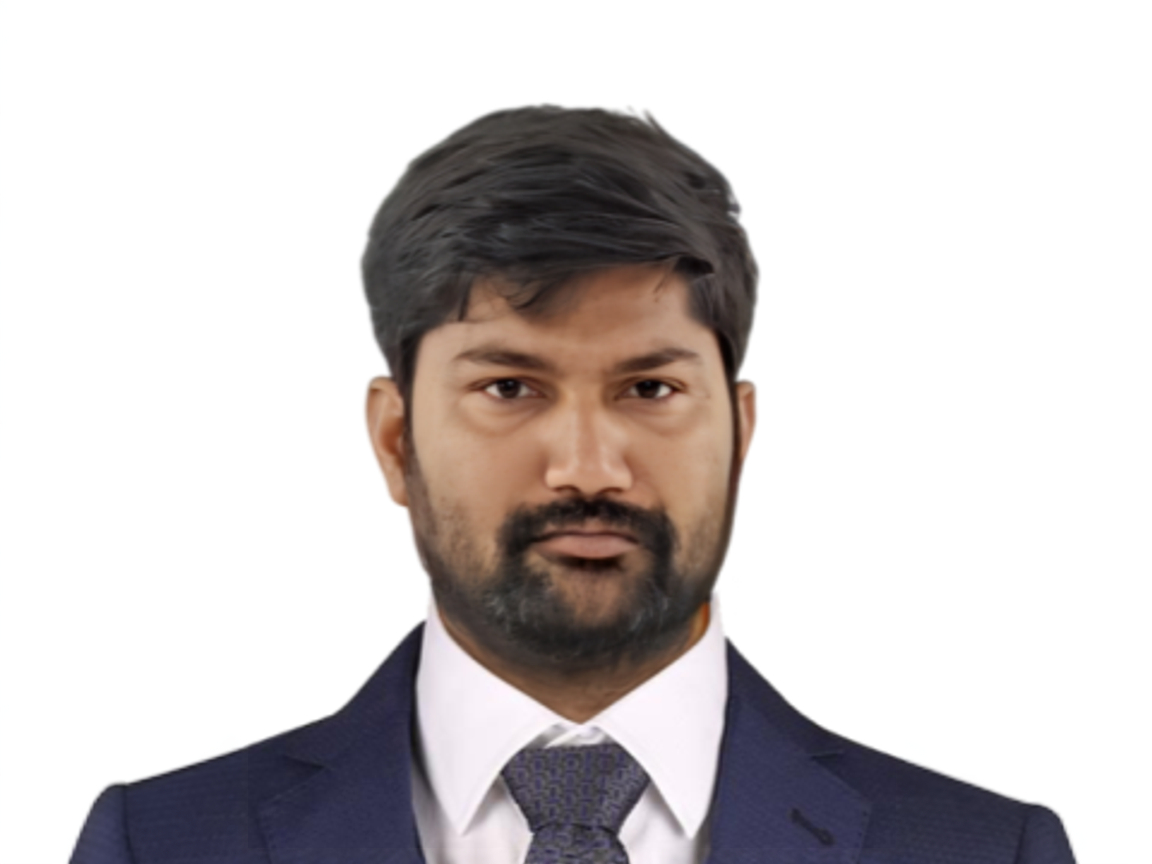
T.SAIDA REDDY
Head of Department
Assistant Professor
Professional Highlights
- Specialization: Agricultural Technology
- Experience: 8+ Years
- Research Areas: Sustainable Farming
- Industry Collabs: 4+ Projects
- ABRCET Tenure: Since 2015
Head of Department Message
T.SAIDA REDDY
Assistant Professor & HOD
As the Head of the Department of Agricultural Engineering, I am proud to lead a team committed to academic excellence and innovation. Our department is dedicated to providing quality education in agricultural technology, mechanization, soil and water conservation, and sustainable farming.
We emphasize practical training, research, and industry exposure to equip students with modern skills. From the second year, students receive specialized training for careers in government and private sectors. Our faculty fosters innovation, internships, and field visits to bridge the gap between traditional and modern farming.
With our strong industry connections and research focus, we prepare students to become leaders in agricultural engineering who can address the challenges of food security and sustainable development.
